How Does Artificial Turf Help Prevent Slips and Falls Around Pools?
Artificial turf can help reduce slip and fall hazards around swimming pools by minimizing muddy patches, improving drainage, and providing a more consistent walking surface than poorly maintained natural grass. When properly installed with suitable materials, synthetic turf helps reduce standing water in landscaped areas and creates a comfortable poolside environment. However, no artificial turf surface is completely slip-proof.
Swimming pools are popular features for homes, hotels, apartment communities, and recreational facilities, but surrounding surfaces can present safety challenges. Wet walkways, muddy grass, uneven ground, and poor drainage may increase the likelihood of accidents, especially in areas with frequent foot traffic.
At Turf Layers, we understand that a beautiful pool area should also be functional, comfortable, and thoughtfully designed. Our professional artificial turf installation services help property owners replace difficult-to-maintain grass with durable synthetic landscaping. Whether you’re improving a residential backyard or upgrading a commercial pool area, choosing the right turf and installation method can help address common landscaping hazards while creating an attractive outdoor retreat.
Poolside Artificial Turf Safety Benefits: Creating a More Secure Outdoor Space
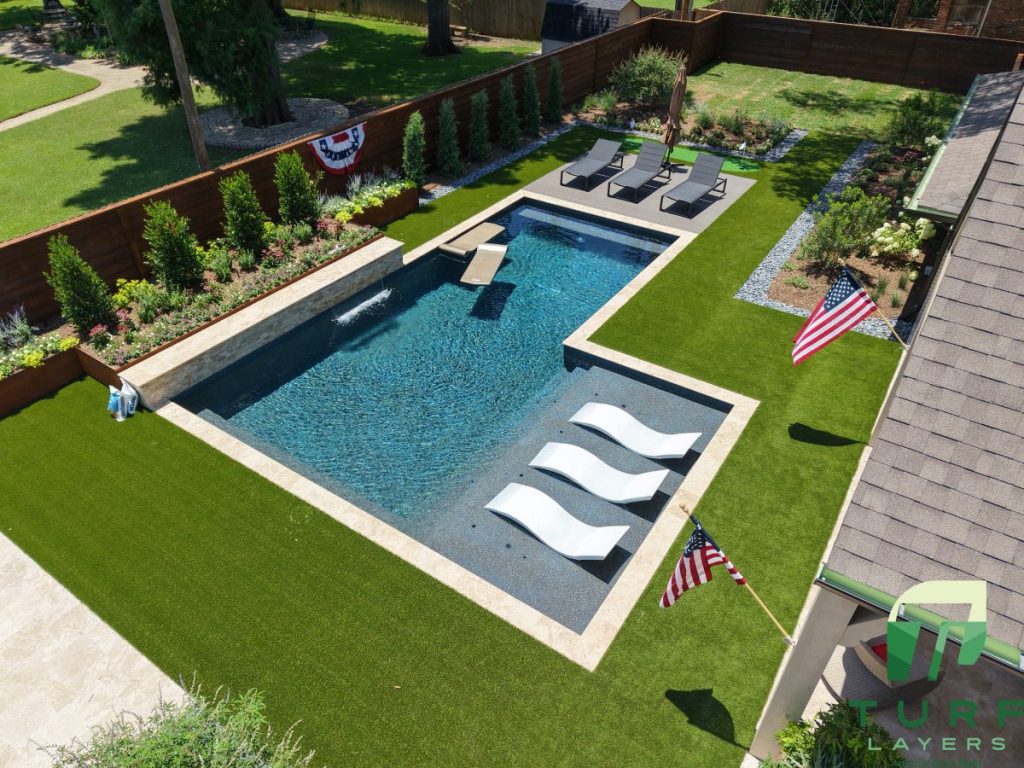
Artificial turf provides several practical advantages for poolside landscaping, particularly in areas where natural grass struggles with excessive moisture, constant foot traffic, and uneven growth.
Understanding how synthetic turf performs around water can help property owners choose appropriate materials and make informed decisions about poolside safety.
How Does Artificial Turf Reduce Slipping Hazards Around Swimming Pools?
Artificial turf helps address common poolside slipping hazards by eliminating muddy grass patches and providing a more uniform landscaped surface when installed over a properly prepared base.
Natural grass can become slippery when saturated, particularly where repeated foot traffic wears away vegetation and exposes wet soil.
Synthetic turf offers several potential safety benefits:
- Less mud: Artificial grass prevents the muddy conditions that frequently develop around heavily used pool areas.
- Consistent surfaces: Proper installation helps reduce ruts, depressions, and uneven patches associated with damaged lawns.
- Effective drainage: Permeable turf systems can allow water to move through the surface instead of collecting in landscaped areas.
- Stable landscaping: A properly constructed base helps maintain the turf’s position and overall surface consistency.
These features can help property owners manage certain hazards commonly associated with natural grass.
However, the actual slip resistance of artificial turf depends on its fiber design, infill, backing, moisture conditions, and installation.
For areas where people regularly walk barefoot or transition directly from the pool, property owners should select turf products with appropriate wet-slip performance information.
Why Is Proper Drainage Essential for Poolside Safety?
Proper drainage helps prevent water from accumulating around poolside landscaping, reducing puddles, saturated ground, and muddy conditions.
Swimming pools generate frequent water exposure from splashing, swimmers entering and exiting the water, cleaning, and nearby irrigation systems.
When surrounding landscaping cannot drain effectively, water may collect in low areas and create uncomfortable walking conditions.
Professional artificial turf installation addresses these concerns through several important components:
- Site preparation: Existing vegetation and unsuitable materials are removed to prepare the installation area.
- Base construction: An appropriate aggregate or engineered base provides stability and supports drainage.
- Grading: Proper slopes help direct water toward designated drainage areas.
- Turf selection: Permeable backing allows water to pass through the turf system.
- Finishing details: Secure edges and properly installed seams help maintain a consistent surface.
Drainage performance depends on the entire system, not just the turf backing. Soil conditions, rainfall, existing drainage infrastructure, and installation methods all influence how effectively water moves away from the surface.
For pool areas, proper drainage is an important part of both safety planning and long-term landscape performance.
Is Artificial Turf Safer Than Concrete or Natural Grass Around Pools?
Artificial turf can offer advantages over natural grass and concrete in certain poolside applications, but the safest material depends on the intended use, wet-slip performance, drainage, and maintenance.
Natural grass provides a relatively soft surface but may become muddy, uneven, or worn in high-traffic locations.
Concrete offers durability and a firm walking surface, but smooth or improperly finished concrete can become slippery when wet. Textured pool-deck finishes are specifically designed to improve traction.
Artificial turf provides a different combination of benefits.
Compared with natural grass:
- Eliminates muddy lawn patches
- Maintains a more consistent appearance
- Requires less routine landscaping maintenance
- Can withstand frequent activity when properly specified
Compared with concrete:
- Provides a softer surface underfoot
- Creates a more natural, landscaped appearance
- Can complement patios and hardscaped pool decks
- Offers design flexibility for lounge areas and decorative spaces
The U.S. Access Board’s ADA Accessibility Standards require accessible floor and ground surfaces to be stable, firm, and slip-resistant. This makes material selection particularly important for commercial swimming pools and shared recreational facilities.
Artificial turf should not automatically replace every hardscaped walking area. Combining appropriate pool-deck materials with synthetic grass in adjacent landscaped spaces often provides a practical balance of functionality and appearance.
What Makes Artificial Turf a Good Choice for Family and Commercial Pool Areas?
Artificial turf can improve poolside functionality by creating cleaner, more durable outdoor spaces that require less maintenance than natural lawns.
For families, synthetic grass helps reduce the amount of mud and loose soil tracked from the yard into the swimming pool or surrounding patio.
It also creates an attractive area for lounge chairs, outdoor furniture, and relaxation.
Commercial properties can benefit from similar advantages, particularly when pool areas receive frequent use.
Common applications include:
- Residential swimming pools: Create clean, attractive landscaping around backyard pools and patios.
- Apartment community pools: Provide durable green spaces near shared recreational amenities.
- Hotels and resorts: Enhance the appearance of poolside lounges, cabanas, and outdoor gathering areas.
- Community recreation centers: Reduce lawn maintenance demands in frequently used outdoor spaces.
- HOA swimming pools: Maintain consistent landscaping around shared amenities.
Artificial turf can also reduce the need for routine mowing near pool areas, limiting landscaping interruptions and grass clippings entering the water.
One important consideration is heat. Synthetic turf can become hotter than natural grass during direct sunlight, especially around exposed pool decks. Choosing suitable products, incorporating shade, and checking surface temperatures before barefoot use are important precautions.
How Can Professional Turf Installation Improve Pool Area Safety?
Professional installation helps ensure artificial turf is properly secured, supported by a stable base, and integrated with surrounding poolside surfaces.
Poor installation can create problems such as lifted seams, uneven edges, inadequate drainage, and shifting materials. These issues may increase tripping hazards and reduce the turf’s long-term performance.
A properly planned poolside turf project should consider:
- Surface preparation: Creating a stable, even foundation before turf installation.
- Drainage design: Preventing water from collecting beneath or around the turf.
- Seam placement: Securing turf sections to reduce lifting and separation.
- Transitions: Creating smooth connections between artificial grass, pavers, patios, and pool decks.
- Product suitability: Selecting materials appropriate for moisture exposure and expected foot traffic.
- Maintenance access: Ensuring the finished space can be cleaned and inspected regularly.
According to the U.S. Department of Justice’s guidance on the 2010 ADA Standards for Accessible Design, accessible routes must meet applicable requirements for stable, firm, and slip-resistant surfaces.
For commercial properties, professional planning should also account for accessibility, applicable building codes, and local pool safety requirements.
A well-designed installation helps property owners enjoy the appearance and convenience of artificial grass without overlooking important safety considerations.
Frequently Asked Questions About Artificial Turf Pool Safety
Is artificial turf slippery when it gets wet?
Artificial turf is not necessarily slippery when wet, but its traction varies by product and installation. Choosing turf with documented wet-slip performance and effective drainage can help reduce certain slipping hazards.
Can artificial turf be installed directly next to a swimming pool?
Yes. Artificial turf can be installed next to swimming pools when the materials, drainage, edging, and surrounding surfaces are appropriate. Installers should also consider pool chemicals, heat exposure, and accessibility requirements.
Does artificial turf get too hot for bare feet?
Artificial turf can become uncomfortably hot in direct sunlight, particularly during summer. Shade, product selection, and checking surface temperatures can help reduce the risk of discomfort or burns.
Is artificial turf difficult to maintain around a pool?
No. Artificial turf generally requires less maintenance than natural grass. Routine care includes removing debris, rinsing residue when appropriate, brushing high-traffic areas, and inspecting seams and edges.
Create a Beautiful, Functional Pool Area with Turf Layers
A thoughtfully designed pool area should offer a comfortable place to relax while minimizing avoidable landscaping hazards.
Artificial turf can help reduce muddy conditions, improve drainage, and create durable green spaces that complement swimming pools, patios, and outdoor entertaining areas.
At Turf Layers, we provide professional artificial turf installation services designed to enhance the appearance and functionality of outdoor environments. From residential backyards to commercial poolside landscapes, our team helps property owners create spaces that are attractive and easier to maintain.
Ready to upgrade your pool area with professional artificial turf installation? Contact Turf Layers to discuss your project and explore the possibilities for your outdoor space.