How Does Artificial Turf Improve Commercial Property Value and Appearance?
Artificial turf enhances commercial properties by improving curb appeal, reducing routine landscaping expenses, and creating durable outdoor spaces that stay attractive throughout the year. For offices, hotels, retail centers, and apartment communities, professionally installed synthetic grass provides a low-maintenance alternative to natural lawns while supporting a cleaner, more consistent appearance and better use of outdoor areas.
Commercial landscaping plays an important role in how customers, tenants, employees, and visitors perceive a property. An attractive exterior creates a welcoming first impression, while neglected grass, muddy patches, and inconsistent landscaping can make even a well-maintained building appear less inviting.
At Turf Layers, we help businesses and commercial property owners transform outdoor spaces with professional artificial turf installation. Our team understands that commercial landscaping must balance visual appeal, long-term durability, maintenance requirements, and functionality. Whether you’re upgrading an office courtyard, enhancing an apartment community, or designing an outdoor gathering space, synthetic turf offers practical solutions that support your property’s appearance and everyday operations.
Benefits of Commercial Artificial Turf Installation for Businesses
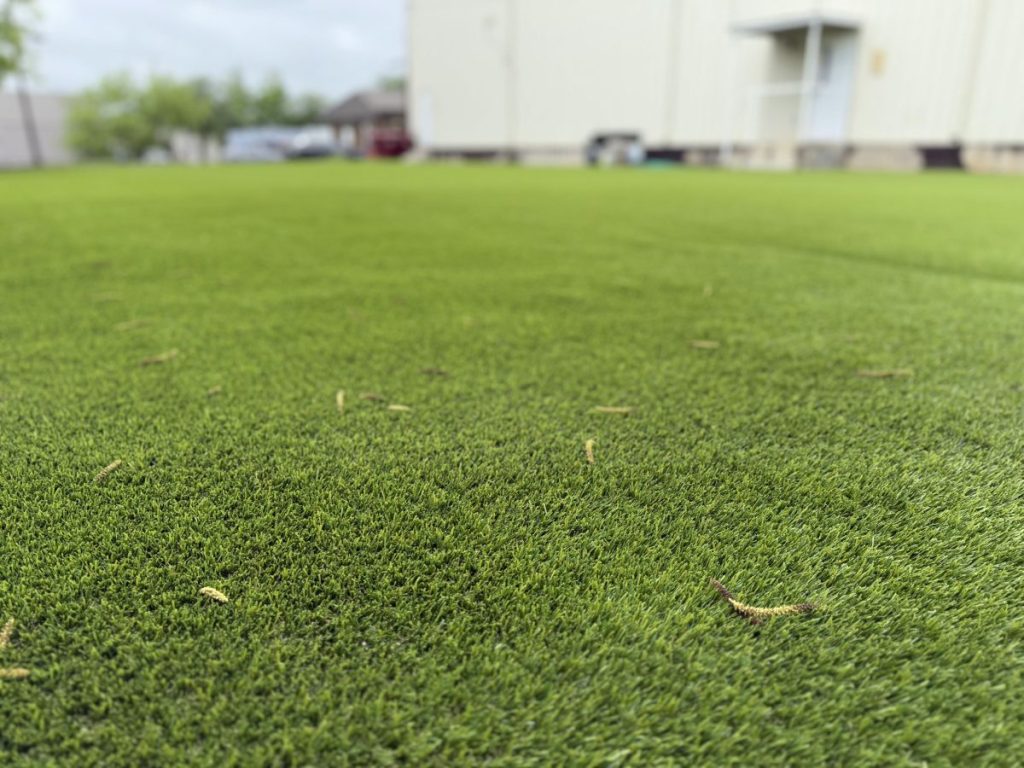
Artificial turf is becoming an increasingly practical landscaping option for commercial properties seeking attractive outdoor environments without the constant upkeep associated with natural grass. From reducing maintenance demands to creating more usable outdoor spaces, commercial synthetic turf offers benefits that extend beyond appearance.
How Does Artificial Turf Improve Commercial Curb Appeal?
Artificial turf improves commercial curb appeal by providing a consistently green, manicured appearance without the seasonal discoloration, bare patches, and uneven growth associated with natural grass.
For commercial properties, exterior appearance influences the experience of customers, tenants, and visitors. A well-maintained landscape can communicate professionalism, attention to detail, and pride in the property.
Synthetic grass can enhance several commercial areas, including:
- Office buildings: Create polished entrances, courtyards, and employee gathering areas.
- Retail centers: Improve landscaped spaces near storefronts, pedestrian walkways, and outdoor seating.
- Hotels and hospitality properties: Maintain attractive lawns surrounding patios, pools, and recreational amenities.
- Apartment communities: Provide inviting green spaces for residents and prospective tenants.
- Restaurants and entertainment venues: Create comfortable outdoor areas for dining, events, and social gatherings.
Unlike traditional lawns, artificial turf does not require mowing to maintain its height or fertilization to preserve its color. This helps commercial properties maintain a consistent appearance throughout the year.
For businesses focused on creating memorable first impressions, professionally installed turf can become an important part of the overall landscape design.
Can Artificial Turf Reduce Commercial Landscaping Costs?
Yes. Artificial turf can reduce recurring commercial landscaping expenses by eliminating routine mowing, substantially reducing irrigation needs, and minimizing the need for fertilizers, weed treatments, and lawn replacement.
Although synthetic grass generally requires a higher initial investment than traditional sod, the reduced maintenance demands can create long-term savings.
Commercial property owners may reduce expenses associated with:
- Water consumption: Artificial turf does not require regular irrigation to remain green.
- Lawn maintenance: Routine mowing, edging, and seasonal fertilization are eliminated for the turf itself.
- Landscape repairs: High-traffic areas are less likely to develop worn grass patches requiring reseeding.
- Equipment and labor: Fewer lawn care visits can reduce ongoing landscaping service requirements.
According to the U.S. Environmental Protection Agency (EPA), landscape irrigation accounts for nearly one-third of residential water use nationwide. Although this statistic specifically describes residential properties, it highlights the substantial amount of water commonly dedicated to maintaining outdoor landscapes.
Commercial properties with large grass-covered areas may also benefit from reduced irrigation demand when switching to synthetic turf.
However, artificial grass is not maintenance-free. Occasional rinsing, debris removal, brushing, and inspections are still necessary.
Property managers should compare installation costs, expected product lifespan, maintenance expenses, and water savings to determine the potential return on investment.
What Types of Commercial Properties Benefit Most from Synthetic Grass?
Commercial properties with high foot traffic, difficult growing conditions, or significant landscaping expenses often benefit most from artificial turf installation.
Natural grass can struggle in shaded courtyards, heavily used gathering areas, and locations where irrigation or maintenance access is limited.
Artificial turf offers a durable alternative for spaces that need to remain attractive and functional despite frequent use.
Common applications include:
Corporate campuses and office complexes
Synthetic grass can create welcoming outdoor break areas, landscaped entrances, and employee recreation spaces without extensive lawn maintenance.
Multifamily and apartment communities
Artificial turf can enhance shared amenities, pet areas, playground surroundings, and outdoor gathering spaces. These improvements can make community spaces more attractive and convenient for residents.
Retail and hospitality properties
Hotels, shopping centers, and restaurants can use synthetic turf to complement outdoor seating, decorative landscaping, and entertainment areas.
Commercial recreational facilities
Artificial grass can provide a consistent surface for designated activity areas, putting greens, and recreational landscaping when the correct product is selected.
The best application depends on how the space will be used, the expected traffic, drainage requirements, and the property’s overall design.
How Does Artificial Turf Support Sustainable Commercial Landscaping?
Artificial turf can support certain commercial water-conservation goals by reducing irrigation requirements and eliminating the need for routine lawn fertilizers and pesticides.
For properties in regions where outdoor watering contributes significantly to utility expenses, these benefits may be especially valuable.
Synthetic turf also eliminates gasoline-powered mowing for the replaced lawn areas, potentially reducing on-site equipment emissions and noise.
However, sustainability involves more than water savings.
Artificial turf is manufactured from synthetic materials and has environmental considerations related to production, heat retention, stormwater management, and eventual disposal. Property owners should evaluate these factors alongside water conservation and maintenance benefits.
Choosing durable products, designing appropriate drainage, and following manufacturer maintenance recommendations can help maximize the useful life of a commercial turf installation.
What Should Businesses Consider Before Installing Artificial Turf?
Successful commercial turf installation begins with understanding the property’s intended use, site conditions, and long-term maintenance needs.
Not all synthetic grass products are designed for the same applications. Decorative landscaping, pet areas, recreational spaces, and heavily traveled commercial environments may require different turf specifications.
Before starting a project, consider the following:
- Foot traffic: Select turf designed to withstand the expected level of activity.
- Drainage: Ensure the base and surrounding landscape can manage rainfall and runoff.
- Turf quality: Evaluate fiber durability, backing materials, and manufacturer warranties.
- Surface temperature: Consider sun exposure and how visitors will interact with the turf during warm weather.
- Installation quality: Proper grading, base preparation, and seam placement affect performance and longevity.
- Maintenance planning: Establish cleaning and inspection procedures appropriate for the property.
Working with an experienced commercial artificial turf installation company helps businesses choose materials and designs that match their operational needs.
Frequently Asked Questions About Commercial Artificial Turf
Is artificial turf worth the investment for commercial properties?
Artificial turf can be worthwhile for commercial properties with high landscaping costs, significant irrigation needs, or heavily used outdoor spaces. The financial value depends on installation expenses, maintenance savings, expected lifespan, and the property’s specific needs.
How long does commercial artificial turf last?
Commercial artificial turf often lasts approximately 8 to 15 years, depending on material quality, foot traffic, sun exposure, installation, and maintenance. Heavily used areas may require earlier repairs or replacement.
Does artificial turf increase commercial property value?
Artificial turf may improve a property’s marketability by enhancing curb appeal and reducing maintenance demands. However, any increase in appraised or resale value depends on buyer preferences, property type, and local market conditions.
Is artificial turf suitable for high-traffic commercial areas?
Yes. Commercial-grade artificial turf can perform well in high-traffic areas when the product and installation are designed for the expected use. Proper base preparation and regular maintenance help preserve its appearance and performance.
Transform Your Commercial Property with Turf Layers
An attractive commercial landscape should do more than look good. It should support your property’s functionality, reduce unnecessary maintenance demands, and create a welcoming environment for everyone who visits.
At Turf Layers, we provide professional commercial artificial turf installation solutions tailored to the needs of businesses, property managers, and commercial development projects.
Ready to enhance your commercial property with durable, low-maintenance landscaping? Contact Turf Layers to discuss your project and discover how artificial turf can transform your outdoor space.