
Design Ideas for Blending Stone, Pavers, and Artificial Turf for Maximum Impact
How to Combine Artificial Grass with Hardscape for a Backyard That Looks Custom-Built
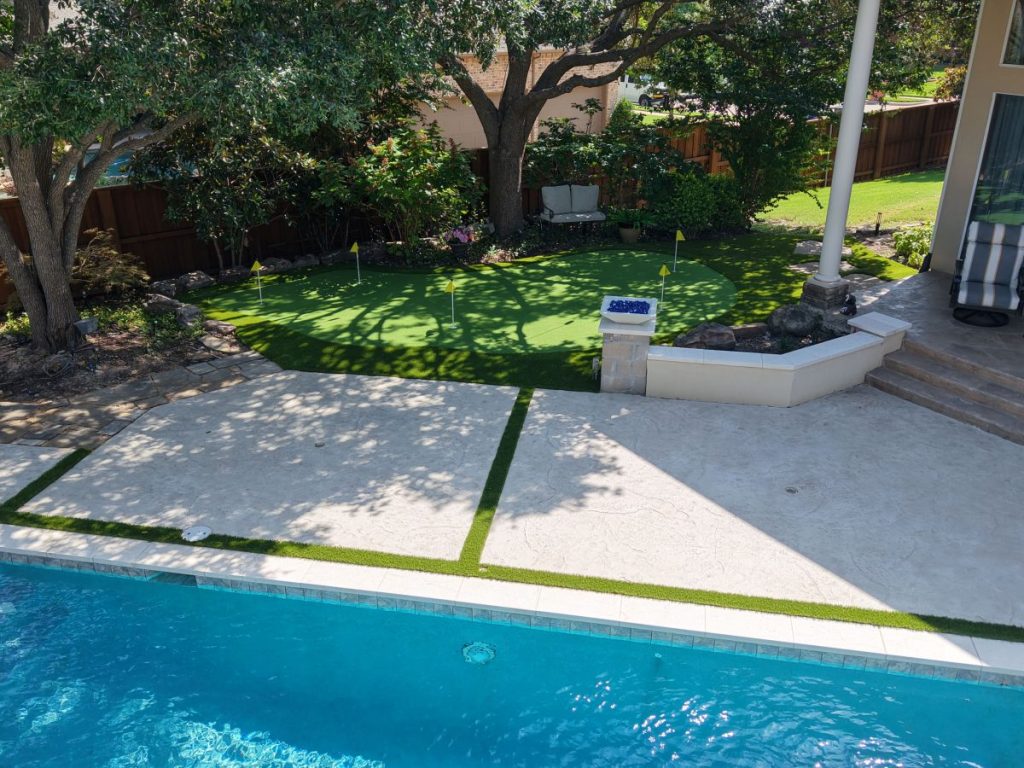
The yards that stop people mid-scroll on social media, the ones that look like they belong in a design magazine rather than a suburban backyard, share a common characteristic. They do not rely on any single material to do all the work. They combine surfaces. Hardscape and softscape work together, texture plays against texture, and the result feels intentional rather than assembled. Artificial turf paired with stone and pavers is one of the most effective combinations in residential outdoor design right now, and it works particularly well in the DFW Metroplex where the climate punishes natural grass and homeowners are investing more than ever in outdoor spaces that perform year-round. Turf Layers is Frisco’s premier artificial turf installation company, serving homeowners throughout the DFW area with premium synthetic grass solutions and the design expertise to integrate turf into sophisticated outdoor landscapes. Here is a practical guide to how stone, pavers, and artificial turf work together, and how to approach the design decisions that determine whether the result looks polished or patched together.
Why Mixed-Material Outdoor Design Works So Well
There is a design principle at work in the best stone-paver-turf combinations that is worth understanding before getting into specific ideas. Every outdoor space benefits from contrast, both visual and textural. A yard that is entirely one surface, all lawn, all concrete, all stone, tends to feel flat and undifferentiated. The eye has nowhere to land. Nothing defines a zone or tells you what the space is for.
When artificial turf is introduced alongside pavers or natural stone, several things happen simultaneously. The green of the turf makes the warm tones of stone and concrete appear richer. The hard, defined edge of a paver creates a clean border that makes the turf feel more lush and intentional by comparison. Zones emerge naturally without requiring walls or fences. A seating area reads as distinct from a play area. A pathway guides movement without signage.
In North Texas specifically, where summer heat means many homeowners are investing in shade structures, outdoor kitchens, and defined entertaining areas, the ability to use material contrast to organize and elevate those spaces adds significant design value to the overall investment.
Stepping Stone Pathways Through Turf
One of the most consistently popular and visually effective combinations is a stepping stone pathway laid through a field of artificial turf. Large-format flagstone, irregular natural stone, or clean-cut concrete pavers are set flush with or slightly above the turf surface, creating a pathway that reads as organic and inviting rather than utilitarian.
The key design decisions here are spacing and stone selection. Stepping stones that are too small relative to the surrounding turf area feel tentative and disconnected. Larger stones, particularly irregular shapes with interesting texture, anchor the pathway and give it visual weight. Spacing should be comfortable for a natural walking stride, which is typically 18 to 24 inches center to center for most adults.
This combination works across multiple zones in the same yard. A stepping stone path from a back door to a pool area, or from a patio to a side gate, creates a continuous design thread that ties the space together. Turf Layers works with homeowners during the design phase to plan pathway placement so that seams and infill are managed correctly around each stone, producing a finished result that looks seamless at every edge.
Paver Borders and Turf Insets
Another high-impact approach uses pavers as the primary hardscape surface with turf inset as a defined panel or pattern within it. This reverses the typical lawn-with-hardscape-edge relationship and creates something more architectural.
A concrete patio with rectangular turf insets, for example, softens what would otherwise be a purely hard surface while maintaining the clean lines and durability that homeowners in DFW need for high-use entertaining areas. The turf insets add color and texture without introducing the maintenance obligations of live plants or the safety concerns of gravel or loose material around children and pets.
Grid patterns, where evenly spaced turf panels alternate with paver squares in a checkerboard or modular layout, are particularly effective in contemporary and transitional design styles that are popular throughout North Dallas. Organic, irregular inset shapes work better in traditional or Mediterranean-influenced homes where softer lines read more naturally.
The precision required to execute paver-and-turf inset designs correctly is significant. Each turf panel must be cut cleanly, edge-secured to the adjacent paver surface, and installed at a height that creates a flush or intentionally raised transition depending on the design intent. Turf Layers’ installation teams bring the technical precision that these more complex configurations require.
Stone Walls and Elevated Turf Platforms
Where a yard has grade change, retaining walls become a structural necessity. In conventional landscaping, those walls are bordered by mulch beds or lawn that require ongoing maintenance. When artificial turf is integrated into a terraced or walled design, it elevates the finished look considerably.
Upper and lower turf levels defined by low stone retaining walls create a sense of organized depth in the yard. Each level becomes its own zone, which is particularly useful for homeowners who want to separate a children’s play area from an adult entertaining space, or who want to visually anchor a putting green on a slightly elevated platform that draws attention from the main living area.
The material pairing matters in this application. Dry-stacked or mortared natural limestone, which is widely available and commonly used throughout the DFW region, pairs beautifully with green turf because the warm buff and tan tones of Texas limestone contrast richly against the cool green of quality artificial grass. Manufactured concrete wall block in neutral tones achieves a similar effect with more geometric precision for contemporary designs.
Combining Materials Around Fire Features and Outdoor Kitchens
The outdoor kitchen and fire feature market in North Texas has expanded dramatically, and these anchor elements present ideal opportunities to incorporate turf and stone combinations in ways that elevate the entire surrounding space.
A flagstone or paver apron around an outdoor kitchen or fire pit, bordered by artificial turf that extends to the rest of the yard, defines the functional zone clearly while providing a durable, heat-resistant surface immediately around the feature. Natural stone capstone on a fire pit surround with turf running to the edge of the stone creates a finished transition that looks considered rather than improvised.
For DFW homeowners who have already invested in an outdoor kitchen or are planning one, integrating the hardscape and turf design as a single unified project rather than separate phases produces a far more cohesive outcome. Turf Layers works alongside clients to coordinate the turf installation with existing or planned hardscape so that every edge, transition, and material pairing is resolved at the design stage.
Ready to Create an Outdoor Space That Combines Stone, Pavers, and Turf Beautifully? Contact Turf Layers Today.
Serving homeowners throughout Frisco and the greater DFW Metroplex, Turf Layers brings premium product knowledge and expert installation to every project, from simple lawn replacements to complex mixed-material outdoor designs. Contact us to schedule your free consultation and start designing the backyard you have been imagining.