
Artificial Turf vs. Concrete: Which Is Better for Outdoor Spaces?
Artificial turf is generally better for outdoor spaces where comfort, appearance, drainage, and recreation are priorities, while concrete is better for areas that need a hard, load-bearing surface. Turf works especially well for backyards, play areas, pet spaces, pool surroundings, and decorative landscapes. Concrete is typically the stronger choice for driveways, equipment pads, and high-traffic utility areas.
At Turf Layers, we know the best outdoor spaces are not designed around a single material. They are designed around how the space will actually be used. Artificial turf and concrete each solve different problems, and in many projects, they can work together to create a more functional, attractive, and low-maintenance property. By considering foot traffic, drainage, comfort, maintenance, accessibility, and the intended use of each area, property owners can make a more informed choice and avoid paying for a surface that does not fit their needs.
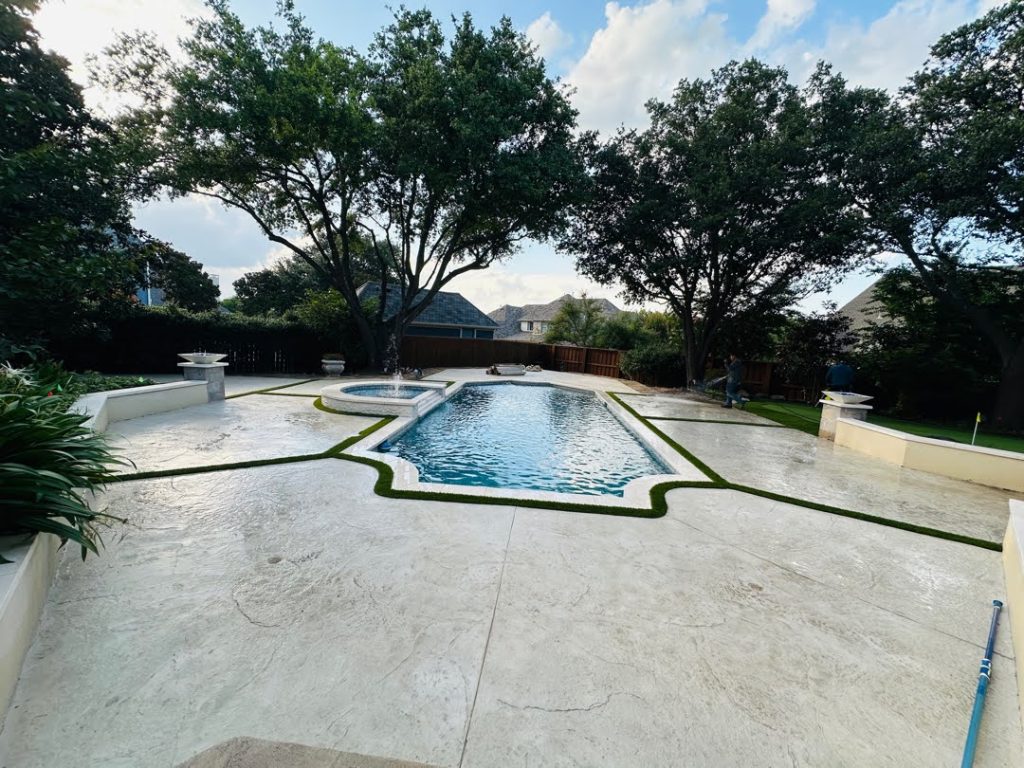
Comparing Artificial Grass and Concrete for Outdoor Areas
Choosing between artificial grass and concrete comes down to function. Artificial turf creates a softer, greener surface designed for recreation and landscaping, while concrete provides the rigidity and strength required for vehicles, heavy equipment, permanent structures, and certain walkways.
The key differences include:
- Comfort: Artificial turf provides a softer surface for walking, sitting, playing, and spending time outdoors.
- Maintenance: Neither material requires mowing, but turf may need occasional brushing, debris removal, and rinsing. Concrete may require cleaning, crack repair, or sealing depending on the installation.
- Drainage: Properly installed turf systems can allow water to drain through the surface and prepared base. Concrete requires appropriate grading and drainage planning to direct runoff.
- Appearance: Turf creates a green, landscaped appearance, while concrete provides a clean, hardscape finish.
- Load capacity: Concrete is generally the better option for vehicles, structures, and heavy loads.
- Water use: Artificial turf does not require routine irrigation to remain green.
According to the U.S. Environmental Protection Agency’s WaterSense program, residential outdoor water use in the United States accounts for nearly 8 billion gallons per day, primarily for landscape irrigation. Replacing irrigated lawn in appropriate areas with artificial turf can reduce the amount of routine landscape watering a property requires.
Is Artificial Turf or Concrete Better for a Backyard?
For backyards designed around relaxation, children, pets, games, or entertaining, artificial turf often provides a more inviting surface than covering the same area entirely with concrete.
Turf can transform spaces that would otherwise feel dominated by hardscape into areas that look and function more like a traditional lawn. Because it does not need mowing, fertilizing, or routine irrigation, it also provides the appearance of a maintained lawn without many of the recurring chores associated with natural grass.
Concrete still has an important role in backyard design. It is well suited for patios, outdoor kitchens, fire feature foundations, walkways, and other locations where furniture, structures, or equipment need a solid base.
For many properties, the best answer is not turf or concrete. It is strategically combining both materials.
Which Surface Is Better Around Pools and Play Areas?
Artificial turf can be a strong option for recreational spaces because it provides a softer surface than concrete and adds a landscaped look around areas where people gather.
Around a pool, turf can create a green transition between the pool deck and the rest of the yard. It can also reduce the amount of exposed hardscape in spaces where families may walk barefoot or children may play. Pool decking itself still needs to be designed for local code requirements, drainage, slip resistance, and the specific pool environment.
For play spaces, a professionally designed turf system can also incorporate an appropriate base and, when required, padding or other components based on the intended use. Concrete is better reserved for places where a rigid surface is necessary.
One important consideration is heat. Research published in the International Journal of Biometeorology found that synthetic grass surfaces can reach substantially higher surface temperatures than natural grass under hot conditions. Turf products, infill choices, shade, site orientation, and how the space will be used should therefore be considered when planning areas exposed to intense sun.
Should You Choose Turf or Concrete for Pets?
For dedicated pet spaces, artificial turf is usually more practical than an all-concrete surface when the goal is to create a yard-like environment.
A properly installed pet turf system can provide:
- A soft surface for running and playing
- Consistent coverage without muddy patches
- Drainage through the turf and prepared base
- Easier removal of solid pet waste
- A green appearance throughout the year
Pet turf still needs cleaning. Routine waste removal and periodic rinsing or treatment with turf-safe cleaning products help keep the area fresh.
Concrete can be useful for kennel runs, service areas, or sections that need frequent wash-downs, but an entirely concrete pet yard may provide less of the soft, landscaped environment many homeowners want.
When Is Concrete the Better Choice?
Concrete is the better choice whenever the space requires structural strength, a rigid surface, or dependable support for heavy loads.
Common applications include:
- Driveways and vehicle parking
- Equipment and HVAC pads
- Outdoor kitchen foundations
- Certain patios and walkways
- Areas supporting heavy furniture or structures
- Accessible routes that require specific surface characteristics
The U.S. Access Board notes that accessible floor and ground surfaces must be stable, firm, and slip resistant. Hardened surfaces such as concrete are reliably firm and stable, although other materials and systems may also meet applicable requirements when properly designed.
Artificial turf should not simply replace concrete in a location where concrete serves a structural or code-related purpose. A professional installer should evaluate the intended use before recommending a surface.
Can Artificial Turf and Concrete Be Used Together?
Yes. In many outdoor designs, combining artificial turf and concrete provides the advantages of both materials.
Turf can soften large hardscaped areas by adding green space between concrete patios, pavers, walkways, or stepping stones. Concrete can then provide the structural surface needed for dining areas, grills, vehicles, or other heavy-use zones.
This combination can be particularly effective for:
- Modern backyard designs
- Courtyards
- Pool areas
- Commercial gathering spaces
- Rooftop or patio-style applications where appropriate
- Putting greens and entertainment areas
- Narrow side yards and pathways
The key is proper installation. Turf placed next to concrete needs careful attention to elevations, edging, drainage, base preparation, and transitions so the finished space performs as one cohesive system.
Frequently Asked Questions About Artificial Turf vs. Concrete
Is artificial turf cheaper than concrete?
Costs vary based on site preparation, square footage, turf product, concrete thickness, drainage requirements, demolition, and labor. Comparing installation quotes is more useful than comparing material prices alone because both surfaces depend heavily on proper site preparation.
Does artificial turf drain better than concrete?
Artificial turf systems can be designed to let water drain through the turf and prepared aggregate base. Standard concrete is impermeable, so water must be directed by grading, drains, or surrounding drainage systems.
Does artificial turf require less maintenance than concrete?
Both are relatively low-maintenance surfaces, but their needs differ. Artificial turf requires occasional debris removal, brushing, and rinsing, while concrete may need pressure washing, stain removal, sealing, or crack repairs over time.
Can you replace an old concrete area with artificial turf?
In some situations, yes, but the existing conditions must be evaluated first. Drainage, elevations, edges, the condition of the concrete, and the intended use of the finished area all affect whether turf can be installed over or in place of an existing hardscape.
Build an Outdoor Space That Fits the Way You Use It
Artificial turf and concrete are not direct substitutes in every application. Concrete excels where strength and structural support matter most, while artificial turf shines in spaces designed for recreation, pets, landscaping, and comfortable outdoor living.
Turf Layers helps property owners determine where artificial turf makes sense and how it can integrate with existing or planned hardscaping. From backyards and pet areas to commercial landscapes and recreational spaces, the goal is a finished surface that looks great and performs for its intended use.
Ready to see whether artificial turf is right for your space? Contact Turf Layers today to discuss your project and create an outdoor area designed around the way you actually use it.